
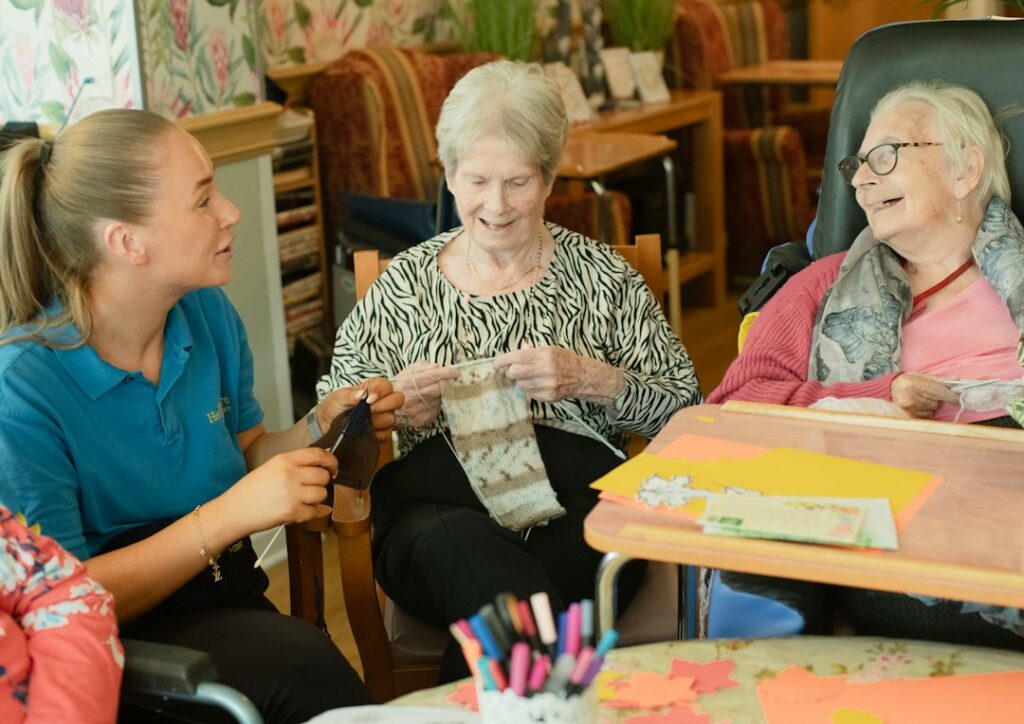
What are intergenerational activities?
Intergenerational activities bring older adults and younger people together for shared conversation, learning, creativity, play, or service. In assisted living, these activities may include visits from children, school-age reading partners, family craft sessions, shared gardening, music programs, or projects that connect residents with younger members of the community.
The goal is not simply to provide entertainment. Meaningful contact between generations can support emotional well-being, mental stimulation, social connection, and a stronger sense of purpose.
For residents in Jenkintown, PA, these activities can be especially valuable during colder months, periods of heavy rain, or stretches of the year when outdoor routines become less predictable. Indoor intergenerational programs can provide connection even when travel or weather limits visits.
How can these activities benefit older adults?
Regular interaction with younger people may improve mood and reduce feelings of loneliness. A visit from a child, teenager, or young adult can give residents something to anticipate and talk about afterward. Even brief, consistent encounters may help break up repetitive daily routines.
Intergenerational activities can also encourage older adults to use skills they already have. A resident may teach a card game, explain a family recipe, describe a former occupation, help with a craft, or share memories about local life. These contributions reinforce that residents are not only recipients of care; they remain knowledgeable people with experiences worth sharing.
Potential benefits include:
- More opportunities for conversation and companionship
- Greater emotional variety during the day
- Increased motivation to participate in activities
- Opportunities to practice memory, language, coordination, or problem-solving
- A stronger sense of identity, contribution, and belonging
- Positive memories that can be discussed with family members
These benefits are not automatic. The quality of the interaction matters more than the number of events. A calm, respectful activity built around genuine conversation may be more meaningful than a crowded program that moves too quickly.
Can intergenerational programs support memory and cognitive engagement?
They can provide useful mental stimulation, although they should not be presented as a treatment or cure for memory loss. Activities that involve storytelling, music, sorting, matching, drawing, reading, or simple games may encourage attention and communication.
For residents living with dementia or other cognitive changes, activities work best when they are familiar, flexible, and free of pressure. A younger participant may ask about a resident’s favorite song, look through family-friendly picture books, or help assemble a seasonal decoration. The resident does not need to remember names, dates, or instructions perfectly to benefit from the social experience.
Helpful adjustments may include:
- Using short, clear directions
- Offering one activity at a time
- Avoiding quizzes that can feel like tests
- Allowing residents to observe rather than participate actively
- Using visual examples and familiar objects
- Planning extra time for responses
- Focusing on enjoyment instead of completing a finished product
A successful activity may look different for each person. Smiling, listening, humming, holding an object, or remaining comfortably present can all be signs of engagement.
What do younger participants gain?
Intergenerational activities benefit younger people as well as older adults. They give children and adolescents opportunities to practice patience, listening, empathy, and respectful communication. Younger participants may also gain a more realistic understanding of aging and assisted living.
A child who helps a resident decorate a card may learn that older adults have interests, humor, preferences, and personal histories that do not fit common stereotypes. A student interviewing residents about past hobbies may discover how technology, transportation, family life, or work have changed over time.
These experiences can help younger people:
- Become more comfortable communicating across age differences
- Develop empathy and confidence
- Learn practical skills from residents
- Hear firsthand stories about history and family traditions
- Understand that aging includes continued learning, relationships, and participation
The relationship should remain mutual. Younger visitors should not be treated as performers, and residents should not be treated as objects of charity. Both groups should have something to contribute.
Which activities work well in assisted living?
The most successful programs are usually simple, adaptable, and connected to participants’ interests. Activities do not need expensive equipment or complicated planning.
Examples include:
- Reading short stories, poetry, or picture books together
- Singing familiar songs or playing simple instruments
- Creating seasonal cards, collages, or decorations
- Sharing recipes and discussing favorite foods
- Planting indoor herbs or caring for container gardens
- Playing checkers, matching games, dominoes, or familiar card games
- Looking at photographs and discussing family traditions
- Building puzzles together
- Recording residents’ stories with permission
- Holding a “show and tell” featuring hobbies, collections, or handmade objects
- Completing service projects, such as assembling care packages or thank-you notes
- Teaching younger visitors basic sewing, knitting, drawing, or craft techniques

Seasonal planning can make activities feel more relevant. During winter, indoor music, storytelling, and craft programs may be comfortable choices. In spring and summer, supervised gardening or outdoor visits may be appropriate when paths, seating, shade, and weather conditions are suitable.
How should activities be adapted for different abilities?
Intergenerational programs should offer more than one way to participate. Some residents may enjoy active conversation, while others may prefer listening, observing, or working quietly beside another person.
Mobility limitations may require accessible seating, clear walking paths, and activities arranged on tables at a comfortable height. Hearing loss may make smaller groups, reduced background noise, and face-to-face conversation helpful. Vision changes may call for larger materials, strong contrast, and verbal descriptions.
Residents with limited stamina may prefer shorter visits with rest periods. People who become overwhelmed in busy settings may do better with one or two visitors rather than a large group.
The activity should be adjusted without making the resident feel singled out. Choice, dignity, and comfort should guide participation.
What safety and privacy issues should families consider?
Safety planning is necessary whenever children or unfamiliar visitors participate in an assisted living activity. Staff and organizers should establish supervision expectations, accessible room arrangements, infection-control practices, and procedures for responding to distress or fatigue.
Privacy also deserves attention. Residents should not be photographed, recorded, or identified in written materials without appropriate permission. Personal stories should be shared voluntarily, and younger participants should be taught not to ask intrusive questions about health, finances, family conflict, or loss.
Families may also want to ask whether an activity is optional, how long it lasts, and how residents can leave or take a break. A resident’s decision not to participate should be respected.
What makes an intergenerational activity meaningful?
Meaningful interaction depends on respect, preparation, and continuity. A one-time visit can be pleasant, but recurring programs often allow trust and familiarity to develop. Younger participants become more comfortable, and residents have the chance to build recognizable relationships.
Activities are most effective when they are:
- Voluntary rather than forced
- Organized around shared interests
- Small enough to allow conversation
- Adaptable to different abilities
- Focused on participation rather than performance
- Repeated often enough to build familiarity
- Reviewed afterward to learn what residents actually enjoyed
The strongest programs treat intergenerational contact as a relationship, not merely an event. A conversation about music, a shared puzzle, or a resident teaching a familiar skill can create connection without requiring a complicated schedule. For older adults living in assisted living, that sense of being heard, remembered, and included can be one of the most meaningful benefits.
